

Discover how research, listening, history, and cultural study shape the creative practices of jazz artists, educators, composers, and improvisers.
Research as a Creative Practice
How can research inspire an artist? For artists, research isn’t just about the act of gathering information in order to gain more knowledge. The curiosity it takes to research is an integral part of the artistry.
Research deepens our creative practice through the creative process. By researching, we end up taking journeys planned and unplanned. We discover the unexpected. Research helps us decide what is worth keeping and what is worth saving for later, similar to the composition process.
These are all exceptional ways in which the artist practices and improves daily. By learning more about jazz history, the artist can directly react or engage with something lesser known in their area, or they can dig deeper into a topic that was always curious. Something that is consistently shared by jazz educators is the idea that you can’t learn how to play a certain style from a page. Meaning, no matter how well you can read the music off the piece of paper, if you don’t listen to the music, love the music and live the music, you’re missing the entire point of what it means to be a jazz musician. That’s the true gift of becoming a jazz musician: the learning never stops because we’ll never stop listening.
How Research Shapes Jazz Education
Curiosity not only inspires the artists. It inspires the next generation of artists too. In the classroom, thematic study can greatly help a student’s understanding of a certain musician’s or ensemble’s sounds. In the college setting, this could be themed ensembles. For example, the Monk ensemble can teach students about how to get into the sound of Monk, beyond the go to “eccentric” stereotype. In a Coltrane ensemble, students can get inspired by his curiosity once they realize that his concept for “Giant Steps” merely began as a practice strategy. An Ellington themed large ensemble can walk an ensemble through the history of writing for a large jazz ensemble, starting by understanding how the actual instrumentation of the ensemble changed and how writing for specific players began the vehicle for not only Ellington himself, but for composers and arrangers into the present day (me included). It’s also important to understand the soloists of the Ellington band as well. For example, why was Paul Gonsalves’s 27-chorus solo on “Diminuendo and Crescendo in Blue” live at Newport such an immediate and continued success, nearly 70 years later? Through a Louis Armstrong ensemble, one could argue (Ricky Riccardi would agree) that students can learn about what it meant to become a true pop-idol, by not only embracing the Hot 5s and Hot 7s, but truly understanding Armstrong’s big band years and “What a Wonderful World.” These are merely a handful of examples, but we use research to try to cater to our learning gaps, to advance our knowledge so that we can become challenged and hopefully inspired. We share iconic recordings and point out why they’re iconic.
Kind of Blue is still the most sold jazz record in history partly Miles Davis understood how to give the players had space to improvise within the modal framework. Jimmy Cobb’s interpretation of the ride cymbal on Kind of Blue itself could be its own dissertation, let alone any of the playing on that entire album. The collection of the ensemble created a different sound that was deep, mellow, but asserting. These are the questions we ask when listening, examining, transcribing and emulating the music. Then, through these acts of making new transcriptions, “shedding” (practicing) and trying it out on the bandstand, we start to begin to understand what it means to be a jazz musician.
Curiosity of the Greats: Research as an Expansion of Musical Language
Stan Getz was inspired by the music and rhythms of Brazil and his iconic recordings with Astrud, João Gilberto and Antônio Carlos (Tom) Jobim went down in history as a new sound that blended the two different countries' musics. Bossa nova was introduced to more of the US listeners due to this collaboration.
Dizzy Gillespie was curious about Cuban rhythms and teamed up with Chano Pozo when writing “Manteca.” The video of Gillespie explaining the writing process is worth watching. Gillespie ended up adding Cuban percussion to his big band the rest is history.
A modern day version of “other inspired” jazz making could be through the lens of Rudresh Mahanthappa who currently serves as Princeton’s Director of Jazz Studies. Mahanthappa, Italian born to Indian émigrés, investigated the Carnatic music of his parents home in south India and has produced new music inspired by that research. His sound is truly unique in that his lived-experiences and active research have deeply affected his approach to playing jazz. Similarly, Dan Weiss, a drummer with whom Mahanthappa works with frequently, has studied and played tabla for years and his drumset playing and teaching has also been deeply influenced.
Matt White, trumpeter and composer, has been fascinated by Gullah spirituals, so much so that he not only has documented them for the elders in South Carolina and as part of his research endeavors, but also arranged and composed Lowcountry using the spirituals as compositional vehicles. This fascination led to a large-scale body of work that featured natives of South Carolina, with Chris Potter at the forefront. Potter is from Columbia, South Carolina. Using the spirituals as the guide, White intricately weaves carefully arranged songs to feature the rhythms and spirit of the elders while exemplifying the modern jazz improvisations by himself, Potter, Quentin Baxter and more.
 bluebandmate52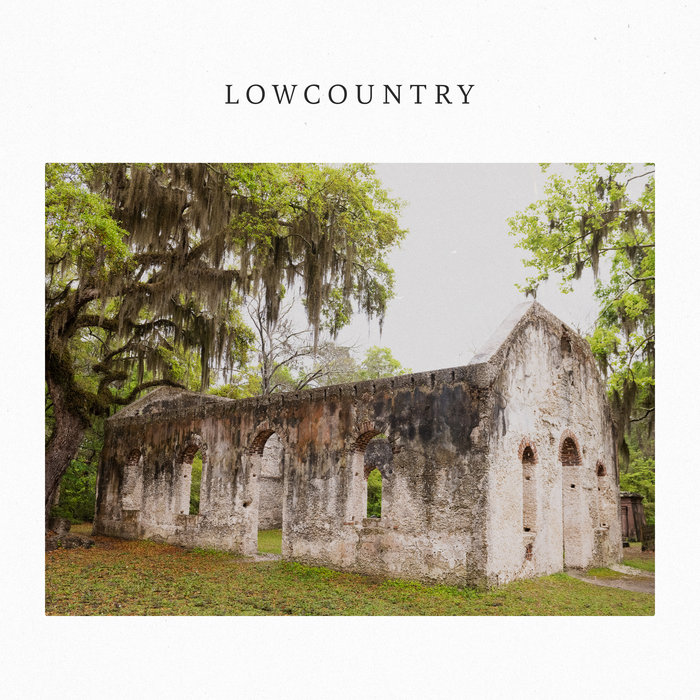
For many artists, research is also a way to engage with different cultures and potentially identity. Miguel Zenón a native of Puerto Rico, has celebrated his heritage through exploring Latin American songbooks with pianist Luis Perdomo. El Arte del Bolero (Volumes 1 and 2) were both nominated for GRAMMYs and Volume 2 won for Best Latin Jazz Album. Zenón also made a record that explored the music of Ismael Rivera via the record, Sonero: The Music of Ismael Rivera.
Research Beyond Music
The idea that research can inspire continues to help grow the music and move it forward. The research that is conducted doesn’t necessarily have to be musically oriented. Some artists like to find outside inspiration. On The Devil I Knew, Nicole Zuraitis’s latest album, she uses poetry as a framework for the five different chapters of the record. This helps complete the narrative journey that the listener takes as each chapter reveals a new story, building on the previous. This structural framework makes the entire album progress in a unique way for the listener that is suspenseful and invigorating.
How Research Drives Innovation in Jazz
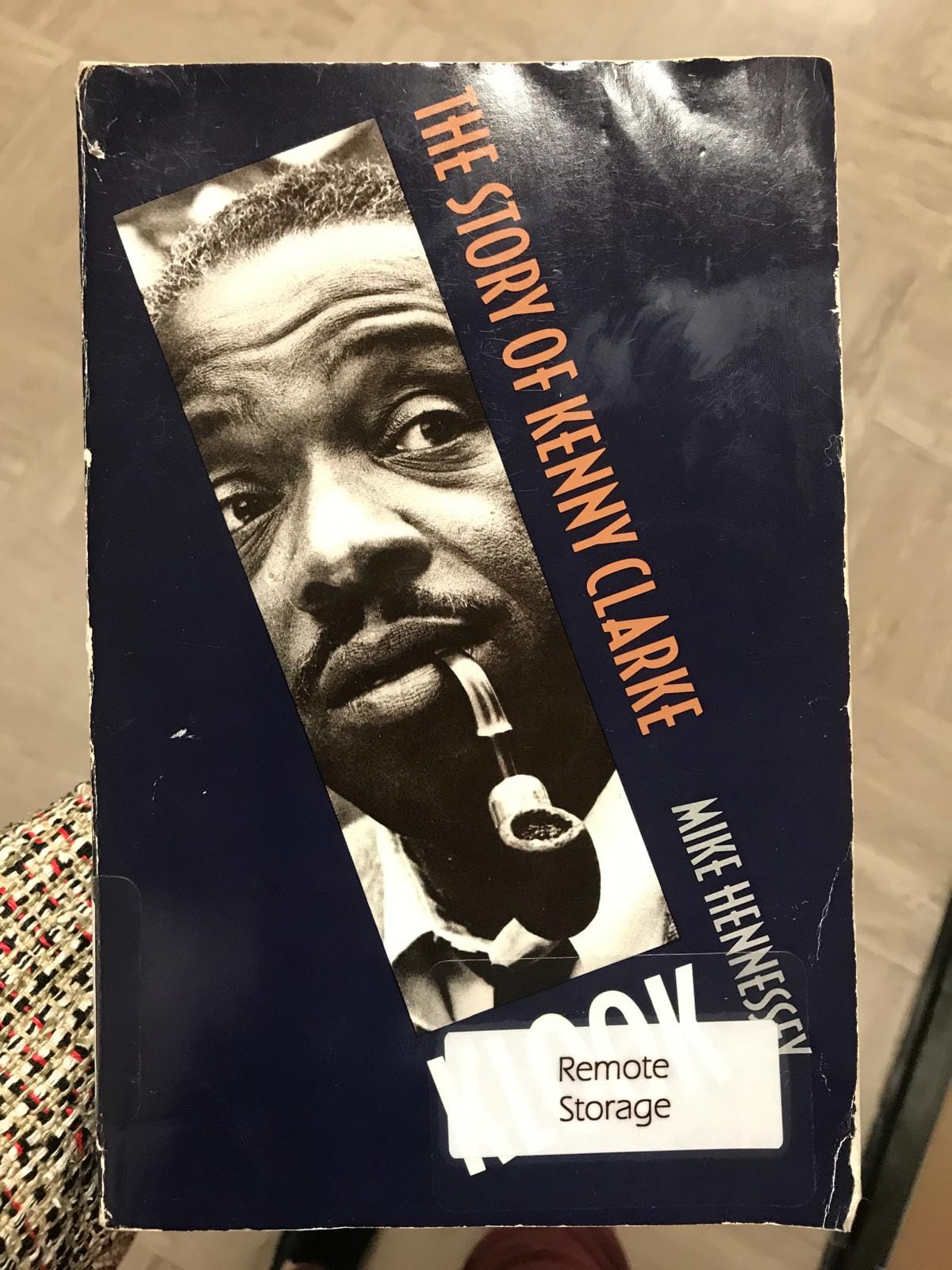
As educators, we hope to provide the tools necessary for our students to find their own paths, which of course includes the foundational knowledge of what it means to play jazz. This also includes understanding jazz’s history in both the musical and historical contexts. One must understand why the beboppers wanted to move forward from the swing era, why Dizzy Gillespie and Kenny Clarke were less than stimulated (See Klook) in Teddy Hill’s big band in the late 1930s.
Music of the swing era differed from bebop as the harmonies were more complex, tempos were faster and the music was no longer made for dancers. This was a new sound, an intellectual music. Miles Davis was constantly pushing the boundaries of what the music could become and that is easily shown through his vast body of his life’s work.
The Learning Never Stops
Research helps us better understand history and help push the music forward. It is not a separate entity in the study of jazz music. For the most accomplished musicians, it’s a necessary component.
Perhaps the most uplifting part about being a jazz musician is that our learning is never done because our listening shapes our learning. There will always be more records to hear for the first time or the 1,000th time. This may be the most remarkable part of being a jazz musician: the learning never stops because we’ll never stop listening.
Access all areas
If you subscribe today, you'll get full access to the website as well as email newsletters about new content when it's available. Your subscription makes this site possible, and allows The Jazz Sentinel to continue to exist. Thank you!
By signing up, you'll get access to the full archive of everything that's been published before and everything that's still to come. Your very own private library.


