

An exclusive interview with Guggenheim Fellow Matt White on his album Matt White's Dolly, arranging Dolly Parton's music, Gullah Geechee traditions, the creative process, and life as a jazz educator.
Great jazz musicians often wear many hats. Few wear as many, and wear them as well, as Matt White. Matt White continues to forge his life as a person that has specifically chosen the path of teacher, while upholding the same standards of artistry. As Professor and Chair of Jazz Studies at the University of South Carolina, White has spent years shaping the next generation of musicians while maintaining an active career as a Guggenheim Fellow, performer, composer, arranger, producer, engineer, and collaborator.
He continues to collaborate regularly with Victor Wooten and Steve Bailey’s group Bass Extremes in both the performing and composing roles. His experience as a Nashville studio musician has shaped his approach to collaboration, production, and recording, both as a trumpet player and behind the console. His research interests and projects seek to uplift the music and culture of the Gullah and Geechee communities that are heavily prevalent in South Carolina.
White’s recent work regarding this research is most immediately reflected via the release of his album Lowcountry which featured South Carolina natives, the elder Gullah singers, Chris Potter, and Quentin Baxter. While employing the old songs from the elders as vehicles for arranging and composition, White highlighted areas for Potter, the ensemble, and himself, to shine. This project was chosen as a featured act during the 2025 Spoleto Festival which featured the full project (with strings). That same spirit of research and curiosity continued in his latest venture, Matt White’s Dolly. He continues to utilize and celebrate the decades of research he has spent with Gullah music and rhythms, while merging with one of the most prolific songwriters of all time, whose catalogue exceeds 3,000 songs, the legendary Dolly Parton. During this interview, White shares how this process developed and how influences from both musics helped him develop the sound for this album.
Also throughout our conversation, White discusses the research behind the project, his arranging process, why he chose the cornet over trumpet for his latest record, and how curiosity continues to drive every stage of his creative life. It's a fitting introduction to both a unique artist and to The Jazz Sentinel.
This dialogue has been refined for clarity. Please visit The Jazz Sentinel's YouTube channel to view the complete podcast.
Colleen Clark: Matt White, thank you so much for joining us. You are one of our first guests here at the Jazz Sentinel. Why don't you take it away by introducing yourself to the audience via what you do, who you are, and what you play, through the lens of your latest record.
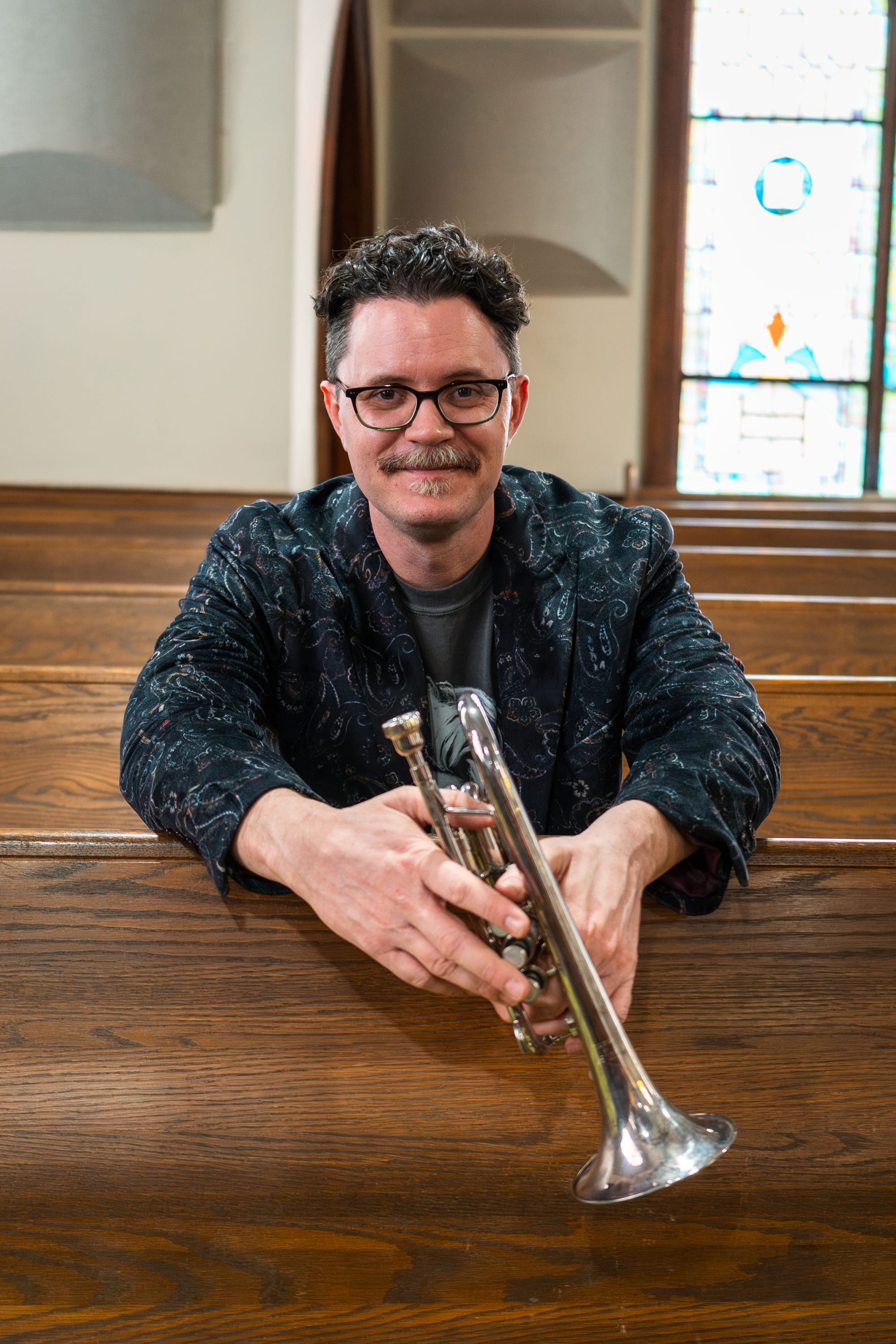
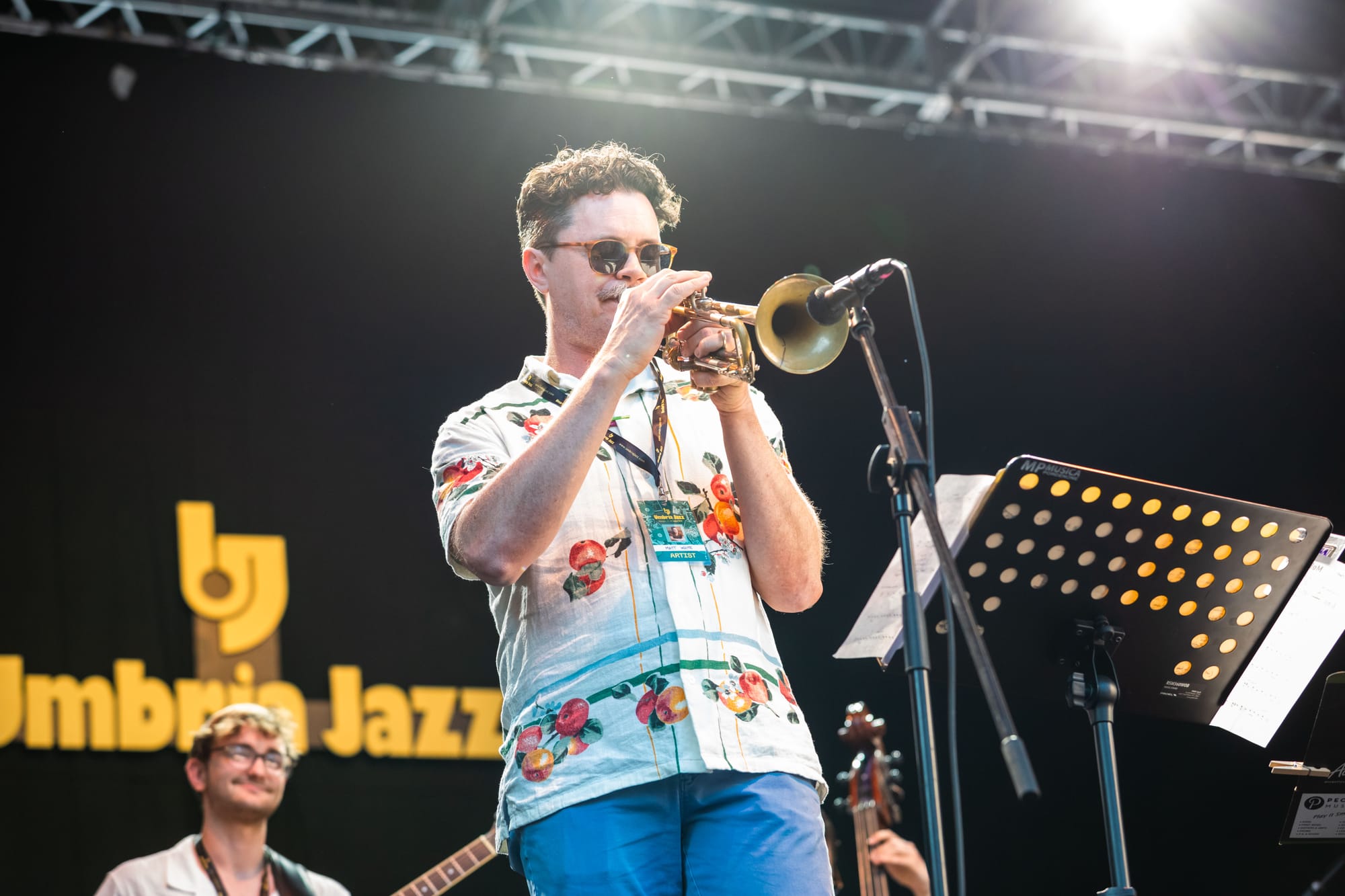
Matt White: My name is Matt White. I am a trumpeter, composer, arranger, orchestrator, teacher and engineer. I'm also Professor and Chair of Jazz Studies at the University of South Carolina, where we work together. My latest project is called Matt White's Dolly, which is a reimagining of early Dolly Parton songs. I got on this deep dive on Dolly music, and I picked apart these tunes and reconstructed them with this band. I did all the arrangements, and I'm actually playing cornet on the record. Liz Kelly is the vocalist, Tim Fisher on guitar, Demetrius Doctor on organ, and you are playing drums.
Colleen Clark: Why did you choose the cornet for this record?
Matt White: One of the reasons I decided to play cornet is because I thought it would be interesting to try to blend it tonally. It's a little darker than a trumpet, so I thought it would be interesting to kind of blend it with the voice, guitar, and the organ, and write it in a way where I was trying to combine all those different timbres. That was part of it, and then also, it was kind of a dumb challenge to make a debut on something (cornet) where I wrote all the music, and the music was hard. When I was writing this record and conceptualizing it, it was at the exact same time I was doing Lowcountry. We recorded these two records in the same summer, even though this one obviously came out after Lowcountry.
For Lowcountry, I felt like my role as a composer, even though I was playing trumpet in the ensemble, I was really writing that music to feature Chris Potter. I wanted to make sure that everything was kind of front-facing with that. More of it was about the work I was doing as a composer and a producer with Quentin [Baxter] putting all this stuff together.
With the Dolly project, because I was focusing so much on being a composer, I was like I want to do something that is going to challenge me as a brass instrumentalist, as a trumpet player. And so, playing a new instrument was part of it.
Writing arrangements that were really challenging to play accurately, and the fact that one of the big decisions for the Dolly record was to do everything in Dolly's original keys (guitar keys). It's a lot of C# minor and E major, stuff which doesn't lay well (on the trumpet/cornet). So I was like I'm going to lock in. I'm going to really try to do this on the cornet. You know, it was a musical challenge, but I think a lot of times creating those musical challenges makes me more invested in the project.
Colleen Clark: What was the prep (your practice) like? Did your practice change because you were playing cornet?
Matt White: Yes and no. I was definitely carving out more practice time on the cornet. With my trumpet practice, I was making sure that I was allocating some time for cornet, but a lot of what I was doing on cornet was just trying to make sure my fundamentals were really strong. Listening to the record now, one of the things I like about it, and it's kind of the same way I feel about flugelhorn. If people don't know, I hate playing the flugelhorn. What was kind of cool about it is because I didn't have so much familiarity. When I hear it I feel like I'm soloing a little differently because even though I felt very physically comfortable on it, it's like I’m still kind of figuring out how I want to play on it. And so for me, I kind of hear myself making different choices than maybe I would have made if I was playing trumpet.
Colleen Clark: Could you talk a little bit about how you went about arranging for this (Dolly) project versus the Lowcountry project. When you were writing, did you already know you were going to play the cornet, or was that a kind of a fluke afterwards?
Matt White: I think I was about maybe halfway through writing the project when I decided I wanted to play cornet. It's funny because every project's a little different. Even though with Lowcountry I knew that Quentin was going to play drums and I knew I wanted Chris Potter to be the soloist, but using strings on it was something I went back and re-orchestrated after I had written a lot of the bones of the actual music. If you write for a big band you know what you're writing for (the standard instrumentation).
I was so on the fence about what the [Dolly] project was going to be. I was just like, I just need to write the music, and I’ll do the orchestration as a completely different thing. But for this project once I started doing the writing, I knew exactly who I wanted to play on it. So, that's how I made a lot of those decisions.
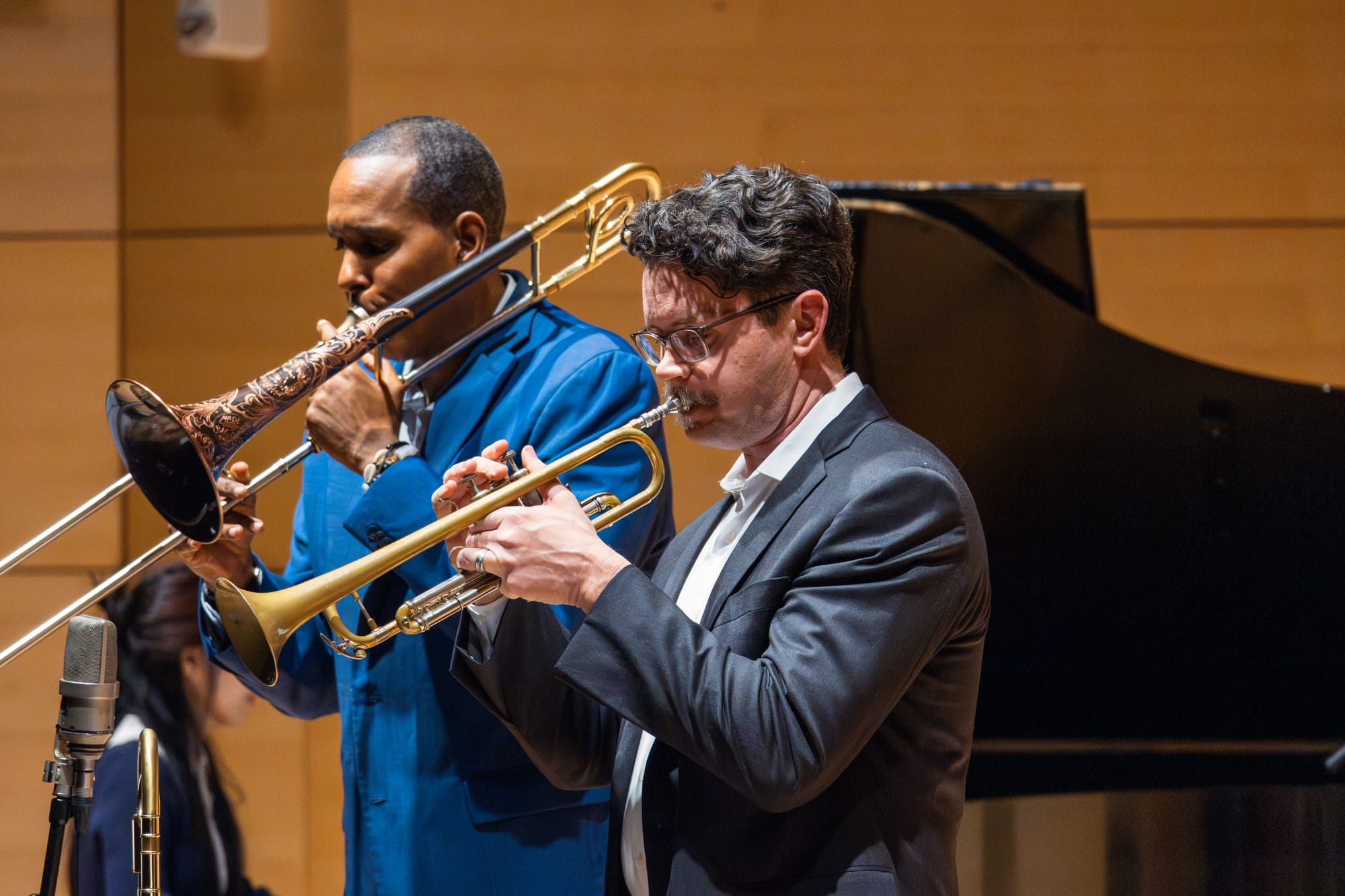
Tim [Fischer] and I have been friends forever, and I know I can torment him with really difficult guitar parts. I knew I was just going to write really hard guitar music. I know Liz [Kelly] really well because she's a former student of mine and so I knew that she would really be able to tow the line between really nailing Dolly's lyrics and the vocal shape, but also feel comfortable with what we were doing to kind of deconstruct everything around that because she's just a great musician. Demetrius [Doctor], I've known Demetrius forever. He's kind of a musical secret weapon because he's adept at everything. He can bring church to this. He can bring his Gullah background. He's a great jazz musician. He's got all this stuff in his bag, and so I knew that he would feel really comfortable with this idea of blurring the lines and genres. Then you know for you too that I trust you so much musically to prepare, but also to orchestrate, and I knew if Colleen's playing drums on this I know that she'll orchestrate the arrangements really beautifully, but then I know she'll also really have an understanding of how we're trying to combine the country traditions and southern folk traditions. Then when we want to swing, that'll still feel really great, too. It was the first time I kind of thought about it from that perspective.
Colleen Clark: That's so interesting, too, because when I was preparing for that, I got with my mentor in Texas. I called up Steve [Barnes] and asked him to teach me everything he knew about train beats.
Matt White: Yeah, and you play so many variations of that beat on the record, which really ties it together.
Colleen Clark: It was just one of those things! When you had that great Modern Drummer review of the record which was so lovely for you (!), they mentioned that I had enough country in the playing. I was like, yes! I did my job.
Matt White: Success!
Colleen Clark: It's so cool when you are able to collaborate with people with a clear vision of what their project is supposed to be, while at the same time, being flexible to put trust in not knowing what's going to happen with those people.
I think that the thing you really have to think about when you're writing for a project or you're going in as a producer is: how much control do you want over everything?
Matt White: Right. I think that the thing you really have to think about when you're writing for a project or you're going in as a producer is: how much control do you want over everything? In this case, as the arranger and the orchestrator, and how much room are you giving everybody to find their way? I think that's really important, which is one of the reasons we had these very through-composed arrangements that we were playing, but that's one of the reasons I did those little “9-to-5” interludes. Everything on this record is really controlled. It would be great if we just played something and just let it happen. It's almost like a mental break from what we were doing to prepare all the arrangements. It's been really interesting because quite a few of the reviews have really homed in on and love those little interludes. I don't want to say it was a throwaway because I'm really happy with the way that they turned out, but I sketched out that arrangement the day before the recording session. We're just going to go in and we're going to play it and see what happens and so everything's a first take.
Colleen Clark: I remember being very new, I'd really just met everyone. So I was like, what does this guy want?
Matt White: Yep.
Colleen Clark: Did you pinpoint a leader for each of those three takes?
Matt White: Yeah. And what we did is I would always play the opening to the chorus, the first couple of notes.Then everybody was in a different key center and then everybody had like a role that they were the leader. The first one I led, the second one Tim led, the last one Demetrius led.
Colleen Clark: It was cool, because that's how they end, too.
Matt White: Right.
Colleen Clark: It's neat that you put those in there, because, maybe without those interludes, the record would have a slightly different flavor, right?
Matt White: Yeah, I think so. You know, thinking of the kind of the narrative journey of all these songs, and then also that kind of narrative going through the music. I kind of looked at these as these only need to be 2 minutes long and they should almost be fun little breaks from these heavy songs and these heavy topics that we're playing these arrangements to.
Colleen Clark: I know that a lot of people have asked you about where this idea came from. You’ve researched Gullah Geechee culture, community and music for over a decade. This project combines that research with the most prolific songstress of America. Can you talk a little bit about that? And then, what I want to get into more is, had you noticed this idea of the 3-3-2 rhythm before with her? I'm curious once you had seen this video, were you thinking this other tune that she does is like that? Or did you kind of go on a research rabbit hole?
Matt White: I think maybe to answer that part first. I kind of knew of Dolly as the cultural icon, the hits, “9 to 5” and “Jolene” and… what's the one she does with Kenny… Kenny Rogers
Colleen Clark: Islands in the Stream.
Matt White: Yeah. I knew about that stuff and I knew about her philanthropy and how she's an amazing human being. I was doing a deep dive one night checking out Bessie Jones, who's a really famous Gullah singer and tambourinist. I got the YouTube suggestions, which said, “Dolly Parton performs ‘The Bridge,’” and it was a solo performance on the Porter Wagoner show.
He introduces her by saying something like, “Well, here's Miss Dolly Parton and she's about to play the prettiest little song you've ever heard.” So she comes out and she plays “The Bridge.” It's the first tune that I did for the record that I arranged and kind of deconstructed. It's the story of this woman who has this love affair and all these important moments happen on this bridge. The twist at the end is that she's standing on the edge of the bridge, she's been abandoned, she's pregnant, and she's going to jump.
She performed this on the Porter Wagner show. I think it was like 1967 or maybe like a year or two later than that. I was really floored by this. I couldn’t believe she did this and for him to introduce it as the “prettiest little song you've ever heard.” There's just all of these fire alarms going off in my head about creativity and what's going on here. She's strumming the 3-3-2 the whole time, which is the ground rhythm that we talk about in shouting songs in the Gullah tradition that still happen at Praise House Services.
Really what that did is that made me go on a deep dive of her records - really starting with the early stuff like “The Fairest of them All” but songs that I didn't know. After I'd done a little bit of research on it and I'd written this arrangement of “The Bridge,” I reached out to Liz. I told her, “Hey, I've got this idea.” Obviously, if you're going to do a Dolly record, the vocalist is the first person you need to get on board. I told her I wanted to do this project. She's like, “I'm super into it.” And I was like, “Could you check out these records?” And we kind of narrowed it down to a couple records. I asked her to tell me the songs that really speak to her.
It was kind of a collaborative project for us, a process at that point of us just picking tunes that had a narrative that we thought was really powerful, and then maybe had musical things that were interesting. Some of those were the 3-3-2, but some of them were things just like phrasing that was really interesting. For example, on “My Blue Tears,” when we played our arrangement of those phrases in the verse are 7-bar phrases.
Colleen Clark: So annoying. Right.
Matt White: Weird, right? But she does that on the original.
Colleen Clark: Yeah. I mean, it's great, but it's like you're not sight reading.
Matt White: It’s one of those things where the phrasing is really in service of the lyrics. You don't notice as much when those lyrics are happening, but when we're soloing on it, you can feel it. You're always, oh, wait, we're back. “Little Bird” was the same way as. That's 3/4, and it goes to a bar of 5/8, and we weren't being super hip. It’s written like that.
Colleen Clark: That's so cool.
Matt White: There was a kind of selection process of wanting these songs narratively that have a story. A lot of times they were stories about things that she obviously dealt with in her background, but these are things that are universal to people that make art. Things like what’s it like to deal with poverty? What's it like to deal with sexism? That stuff was really powerful, because I thought, this is still stuff that holds up as a narrative, all these years later about these issues people are dealing with and they're very powerful. Those were kind of the guiding principles musically and content wise of how we selected the tunes for the record.
Colleen Clark: Did you pick more songs than you actually recorded?
Matt White: There are a couple others that I had selected and I have sketches of but we'll do those later. We’ll probably still do those later at some point.
 aquarisa
Colleen Clark: I figured as much because as researchers, we get so excited about finding material. Then we have to choose.
Matt White: I think for me as a writer, that's one of the challenges. I'm definitely a person that overwrites and has to edit everything down and so sometimes telling yourself to stop is really difficult. This is enough for a project. Now I need to fine-tune all this and I need to stop digging into these other tunes.
Colleen Clark: It's interesting to say that because when you're writing for whatever project, how much do you allow for editing? Are you one of those people that understands the deadline is October 1st for this big band record and you’re done on September 1st and then you're editing for a month? Or is it tune by tune? How does your brain work around that editing process for your projects?
Matt White: This isn't always the case, but I think generally speaking, I try to make the editing process different from the writing process. Because even though I've got guidelines that I'm always thinking about when I'm writing to keep myself from going down little rabbit holes to see where they lead. Sometimes, I might spend a day going down this path, and have a page full of stuff that could be related to this, and I might not actually use that on the record. Generally speaking, with my writing, or process (whatever that means), I use maybe 30-40% of what I actually wrote on a project. I like that because I feel like it makes me make decisions about what is the best material. I think when I was younger and I was working on much tighter deadlines, just because that's the way life goes, I felt a lot of times I was making decisions because I had to make a decision.
It's like, I’ve got to get this done. This works, right? Now, I much prefer having an open timeline where I can kind of simmer with this for a little bit. What I've learned over the years, for the way that I write is that when I was younger, I was very much like I'm going to spend 6 hours writing straight and I would just be locked in. But now that I'm older and I’ve got kids, and responsibilities, I feel like I'm much more comfortable where I can write for an hour. Then I can kind of walk away and have it in the back of my mind and be thinking about other solutions, right? When I come back, it's like maybe this will work, or I kind of thought about this. I think if I'd been sitting there for that long time, I wouldn't have gotten to the same place.
Colleen Clark: Well, and fatigue is different at different stages of life too, right? You have a different outlook on everything, right?
Matt White: Now, I'm always the person that's like get me everything now, because I don't like feeling rushed. Usually when that happens, I actually get everything done early. It's completely off of my plate. It's done. I feel good about it. I don't feel like I turned this in the night before, and there's those eight bars I really don’t love.
Colleen Clark: In those scenarios too, with your recording work too, I bet there are some bosses that are like you're already done? Can I give you something else too, right?
Matt White: Oh, sure, yeah.
I think a lot of times for us to welcome chaos and to be comfortable with chaos, we have to really prepare really well.
Colleen Clark: You know, I have this idea. Could we try this instead? That kind of professionalism goes such a long way. Talking about your recording and engineering, how does that look for you now? Talk a little bit about your experience with that. What does your engineer life look like right now?
Matt White: In terms of my recording background, I think that it's just another level of preparation. When we did this record [Matt White’s Dolly], we did it at Steve Bailey's recording studio in Myrtle Beach. I'm very familiar with that room from being friends with Steve. I felt very comfortable with the gear, the space, and all the little quirks at that home studio. I think the main thing is just how you would prepare in practicing, knowing your music, and having everything prepared going there? As a composer, knowing your scores really well. It's just a matter of planning. I was thinking about where we were going to place things, what kind of microphones we were going to use, setting the templates in the Pro Tools session ahead of time.
This relates to the composition stuff too. I think a lot of times for us to welcome chaos and to be comfortable with chaos, we have to really prepare really well. Everything I can possibly prepare to the best of my ability, let me prepare it so that when something goes wrong, or something gets weird, or even if we want to take a different creative choice with something, everything else is in place so that we can do that.
Practice prepares you to be able to deal with this kind of stuff. Why isn't this working? Why do I sound bad on the bridge of this song? Let me come up with a strategy to fix it.
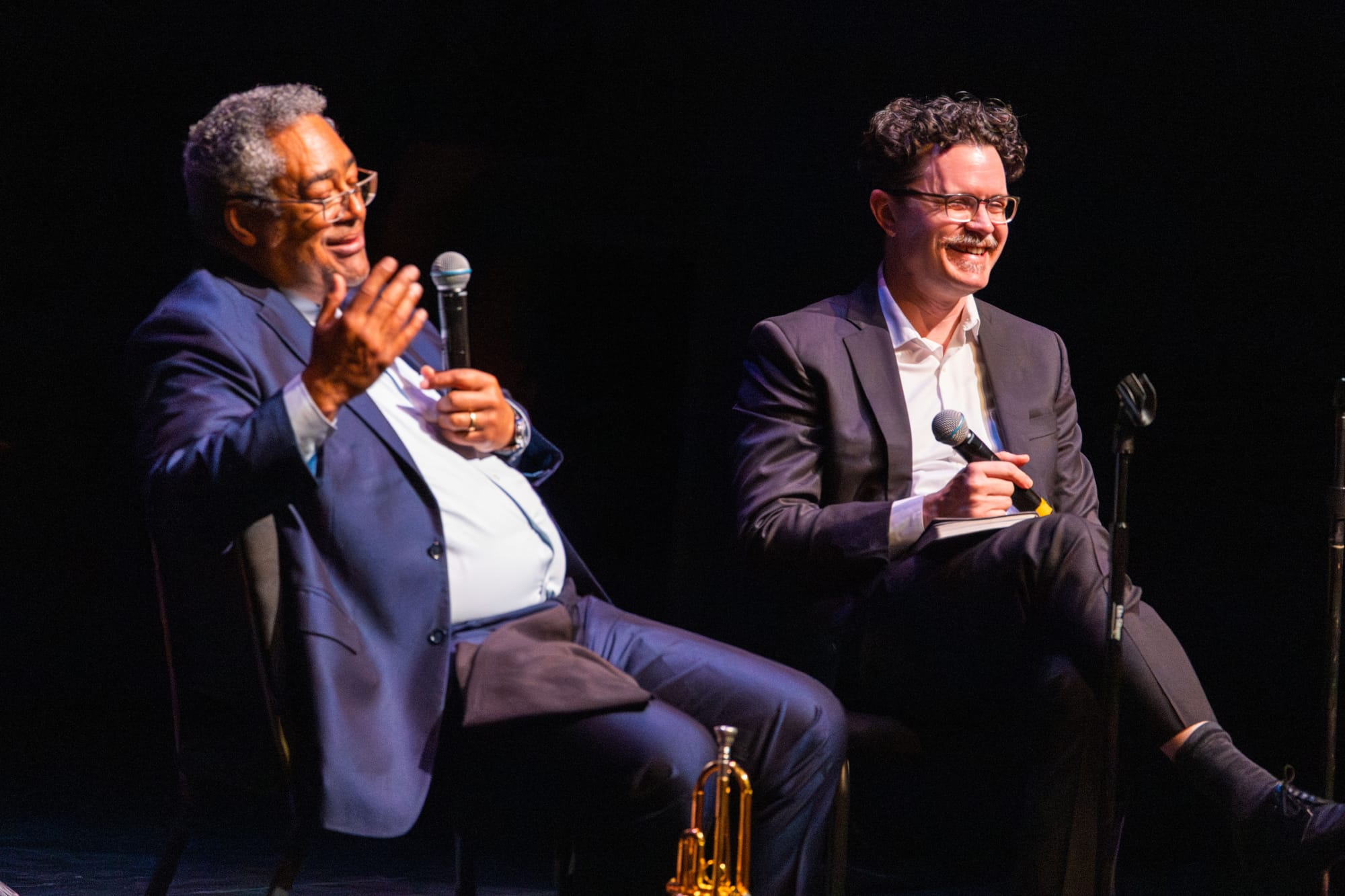
Colleen Clark: Yeah, definitely. Having worked with you in these multiple capacities at this point, small group, big band, you're running it, you're not, I've seen a lot of tactical ways that you use to work in these environments. Can you talk a little bit about what it's like to be the head engineer versus someone that maybe comes in later, and how you deal with both of those roles, in case people are interested in going this way.
Matt White: For example, if I'm not the engineer, I might mix a record, or have to do some work on a record later. To be honest, the biggest thing is being really patient with just how different workflows are for recording and composing. People have different workflows for recording. A lot of times, I'll go in and I'll see a session or something that somebody sent me, and I've got to work on it. For the way my brain works, things are labeled and are routed very weirdly. So I think a lot of it is just patience and being like I can figure this out.
I'm working on a project now, where the first day of the recording (I didn't realize it when we were making this record) but the first day of the recording, the two interfaces that were recording were not time-locked. So, a bunch of the tracks are playing at a different time than the other tracks.
I opened the session, and I'm playing back and I'm hearing all this stuff that's crazy. I'm like what is happening?
So I had to spend a couple hours just figuring out. I'm not necessarily communicating with the engineer so you're doing a lot of guesswork. You're going it looks like this is what happened, and let me see if I can find how many milliseconds were off, and which tracks. Let me go ahead and do those nudges to line them back up. Then I have to cut them together so that they're synced together so I can export them to my mix template. It's like a whole thing. This is something we tell our students all the time.
Practice prepares you to be able to deal with this kind of stuff. Why isn't this working? Why do I sound bad on the bridge of this song? Let me come up with a strategy to fix it. When you hear a problem as an engineer, and you go I think this is what's happening. Let me try to figure this out and see what I have to do to fix it.
Colleen Clark: Yeah and that's why I found it to be important to have you as one of our first guests, because all of your work is interconnected. Your work as a trumpet artist, an engineer, a teacher, a composer, all these things are interconnected in that a lot of it seems like it's based on problem solving. Would you agree with that?
Matt White: Yeah, and I think that to me the most important things for a successful musician are the ability to problem solve. Curiosity, is really important and time management. What's interesting is none of those things are musical skills. For me, they're all the things that if I think about a version of success I've had in music; that they were all kind of based on developing those skill sets. It's not limited to my role as a trumpet player, a composer, or an engineer. Feeling like I can figure stuff out has allowed me to do other things in life that have been helpful.
Colleen Clark: Talk a little bit about your plans for your next big project or records that are coming out, whatever you want to share for people to look forward to after they buy your Dolly record.
Matt White: I'm always working on something. Now it's kind of balancing things that I’m doing to help with other people's projects. We played on a Mike Dease big band record that's done. Not the one that just came out, it's a different one that we did, and I just mixed that record in addition to contributing arrangements and playing in the trumpet section. I'm really excited about that.
I'm doing a project which I can't say what it is, for Victor Wooten, Steve Bailey, and Gregg Bissonnette’s Bass Extremes right now. I think it's not going to be what a lot of people expect it's going to be, which is really, really neat. Then, I have this one project that's kind of on the back burner that's related to Lowcountry, which is Songs of Protest. I’m taking these Gullah spirituals and shouting songs and hymns that were really key songs as part of the Civil Rights Movement. These were songs that were kind of disseminated all through the South through these different community sings programs. They pretty much originated in our backyard so I've written a bunch of re-imaginings of this music, kind of in the vein of Lowcountry. I want to do that record as a big band with a bunch of guest artists. I'm doing the sketches for that as we financially plan that record.
The other thing which is not something I was expecting to do this summer, but I haven't written my original music in a while. I've done little bits and pieces here when we have faculty concerts. I'm trying to think about writing original instrumental music, just because maybe I've got a different perspective on it than when I was writing for folk projects. Before I got involved in this Southern folk music whole concept, and so trying to do all those, without putting a lot of judgment on that. I don't know what it's going to be. I know I want you to play on it. Maybe I’ll listen to a lot of string quartet music again. Maybe if it's a rhythm section and me and a string quartet. I’m messing around with some stuff and just seeing what happens.
Colleen Clark: That's awesome. For people that maybe haven't checked out your music just yet, where can they find your stuff? Where can they find you?
Matt White: Always go to my website. It's probably the easiest way, which is mattwhitejazz.com. That links to all my streaming stuff, and all the social media. I've got a couple records out that were pretty early in my career, where it's mostly my original instrumental music. Of course, Lowcountry, which came out a couple years ago, was funded by my Guggenheim Fellowship in Music Composition. Matt White’s Dolly, which just came out back in May, is receiving a lot of fantastic feedback, and I'm super-duper proud of it. The other projects that I get to play on, either as a trumpet player or contributing in some other way.
Access all areas
If you subscribe today, you'll get full access to the website as well as email newsletters about new content when it's available. Your subscription makes this site possible, and allows The Jazz Sentinel to continue to exist. Thank you!
By signing up, you'll get access to the full archive of everything that's been published before and everything that's still to come. Your very own private library.


